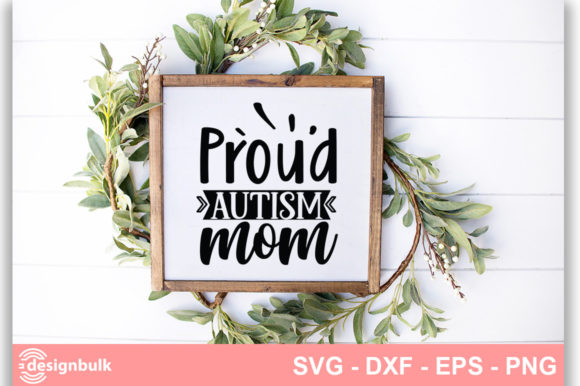
Proud Autism Mom SVG: An Embroidery Review
As a professional embroidery designer and product reviewer, I approach every digital asset with a critical eye toward its stitchability. When evaluating the Proud Autism Mom SVG, my first thought is not just about the sentiment, but how those vector lines will translate into thread on fabric. While this file is marketed primarily as a vinyl decal cutting file for machines like Cricut Explore, experienced makers know that clean vector art is often the foundation for excellent digitizing. However, converting a graphic intended for vinyl into a functional machine embroidery design requires careful judgment. This review breaks down exactly how this word art performs when adapted for real-world stitching projects, from custom apparel to personalized gifts.
Translating Vector Word Art to Thread
The visual personality of the Proud Autism Mom SVG is bold and declarative. As a piece of graphics within the Crafts category, it relies on typography to carry emotional weight. For an embroidery project, this means the font choice is everything. In vinyl form, the letters are solid shapes. In embroidery, we must decide whether to render them as satin stitch columns or fill stitch blocks. My assessment is that this design demands a satin stitch for smaller applications to maintain crisp legibility, but larger versions may require fill stitches to prevent excessive density and fabric puckering.
When I look at this layout, I see a design that naturally belongs on center-chest placements or tote bags. The mood is proud and resilient, which dictates our thread color choices. High-contrast combinations are essential here. A white thread on a navy sweatshirt or metallic gold on a charcoal tee ensures the message reads clearly from a distance. If you are using this as a base for digitizing, avoid overly distressed or grunge textures in the lettering unless you are an advanced digitizer; clean lines always stitch better than complex artistic effects.
Real-World Application: The Custom Sweatshirt Test
To truly evaluate this asset, I mentally applied it to a current client request: a custom embroidered sweatshirt for an autism awareness fundraiser. The goal was a wearable item that felt boutique-quality rather than like a generic uniform. Using the Proud Autism Mom SVG as the design source, I considered the placement carefully. On a fleece sweatshirt, the fabric texture can swallow fine details. Therefore, I would recommend increasing the column width slightly during the digitizing phase to ensure the satin stitches sit on top of the fleece pile rather than sinking in.
For this specific handmade product, the design serves as a powerful conversation starter. Customers engaging with Etsy sellers or small shop products often look for items that validate their personal journeys. This design succeeds because it is specific yet stylish. However, if you are creating merchandise for sale, you must verify the commercial licensing included in the zipped folder before listing any finished product. Assuming the license permits commercial use of finished goods, this design has high potential for holiday embroidery collections or Mother’s Day specials where personalized gifts drive significant revenue.
Navigating Fabric Challenges and Stabilization
Not all fabrics treat word art equally. During my evaluation, I identified several scenarios where caution is necessary:
- Stretchy Knits: When applying this to t-shirts or baby clothes, the horizontal span of the text can cause tunneling. You must use a cut-away stabilizer and potentially a water-soluble topping to keep the letters defined.
- Curved Surfaces: If adapting this for cap embroidery, the straight baseline of the original SVG will need to be arced in your software. Flat text on a curved hat brim looks unprofessional and distorts the readability.
- Dark Fabrics: Avoid using dark thread on dark fabric without adequate underlay. The stitch definition gets lost, diminishing the perceived value of the commercial embroidery piece.
- Frequent Washing: For items like kitchen towels or aprons, ensure the stitch density is balanced. Too dense, and the fabric tears after laundering; too sparse, and the letters fray.
Stabilizer selection is non-negotiable here. Because this is a text-heavy design, the pull compensation settings in your embroidery file must be dialed in perfectly. I always advise testing on scrap fabric that matches your final project's weight and weave before committing to the finished garment.
Commercial Viability and Brand Consistency
For creative entrepreneurs and apparel decorators, consistency builds trust. If you offer the Proud Autism Mom SVG across multiple products—perhaps matching a tote bag design with a nursery pillow cover—the stitching style must remain uniform. Mixing running stitch outlines on one item and heavy satin fills on another creates a disjointed brand experience. Buyers expect professional results, even from hobbyists.
This design also offers excellent opportunities for printable mockups. Before stitching, import the vector into design software to visualize colorways against different garment backgrounds. This saves time and thread. However, remember that a digital mockup cannot simulate stitch tension or fabric drag. Always produce at least one physical sample to photograph for your listings. Authentic photos of the actual embroidered patch or garment convert better than sterile digital renders because they prove the design actually works in thread.
Critical Designer Notes Before You Stitch
Before you load this digital embroidery file into your machine, run through this practical checklist derived from professional testing standards:
- Verify File Contents: The product description mentions a zipped folder for paper crafting programs. Confirm whether embroidery-specific formats (PES, DST, JEF, etc.) are included or if you are receiving only vectors (SVG/DXF) that require manual digitizing.
- Check Licensing Terms: Never assume you can sell finished items or share the digital file itself. Read the license agreement inside the download explicitly.
- Assess Hoop Size Compatibility: Measure the design dimensions. Ensure it fits your hoop with adequate margin for stabilization. Resizing word art can distort letter spacing; resize within your embroidery software, not just by dragging corners.
- Test Small Details: If the SVG includes intricate serifs or decorative elements, test stitch those areas first. Tiny details often require simplification to prevent needle breaks or thread bunching.
- Evaluate Contrast: Print a black and white version of the design. If the text disappears or blends together in grayscale, it lacks sufficient contrast for embroidery. Adjust thread colors accordingly.
Final Thoughts on Value and Execution
The Proud Autism Mom SVG represents more than just a graphic; it is a vehicle for connection. When executed correctly as an embroidery project, it transforms a simple digital download into a cherished keepsake or a best-selling inventory item. The key lies in respecting the medium. Vinyl cuts forgive minor imperfections that embroidery amplifies. By focusing on proper stabilization, appropriate stitch types, and rigorous testing, you elevate this design from a basic craft file to a professional-grade asset.
Whether you are a seasoned Etsy seller expanding your niche or a mom making a personalized gift for a friend, treat this design with technical respect. Check your stitch density, honor the fabric's limitations, and verify your usage rights. When these practical elements align with the heartfelt sentiment, the result is a finished product that resonates deeply with its audience and stands up to the wear and tear of daily life. That is the true mark of successful embroidery design adaptation.